









Ashtami, the eighth lunar day marking Krishna’s birth, starts at 2:25 AM on 4 September 2026 and runs until 12:13 AM on 5 September. That split is why Smarta households fast on the 4th, while Vaishnava followers and ISKCON observe it a day later.Whichever day applies to you, the morning routine is the same. Eat a light, grain-free breakfast before sunrise if you’re not attempting a fully waterless fast. A bowl of fruit, a glass of milk, or a few makhana (fox nuts) roasted in ghee gives you something in your system before the long stretch ahead.Skip anything heavy. You’re not loading up for a marathon, just easing into a day with less food than usual.
The afternoon is where most fasts break
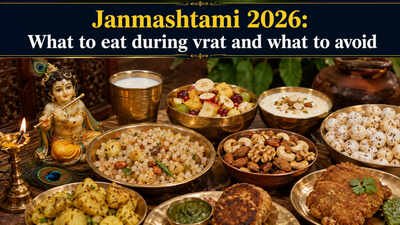
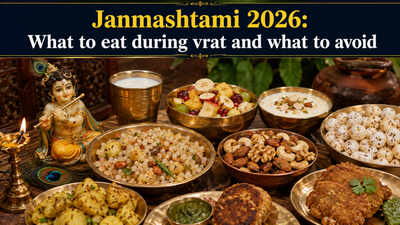
By early afternoon, hunger stops being polite. This is where the permitted list matters.Kuttu (buckwheat) atta, singhara (water chestnut) atta, rajgira or amaranth flour, sabudana (tapioca pearls), and samak or barnyard millet form the backbone of vrat cooking because none of them count as grains or cereals in the fasting framework, even though kuttu and samak look and cook like grains.Potatoes, sweet potato, raw banana, and makhana round this out, along with fresh fruit, dairy, and dry fruits. Regular wheat, rice, and pulses or lentils are out, as are onion and garlic, which are treated as tamasic, meaning they’re thought to stir up restlessness rather than calm.Whether or not that explanation resonates with you, the practical effect is a diet lighter and simpler than your normal one.
Why the salt in your kitchen is the wrong salt
Ordinary table salt is refined and iodized, while vrat cooking calls for sendha namak, or rock salt, instead. The reasoning isn’t nutritional trivia; it’s about staying close to unprocessed food during a period meant for restraint.Sendha namak is mined rather than manufactured and generally does not contain the anti-caking agents found in many forms of table salt, which is part of why vrat food tastes milder.One caveat: rock salt is not necessarily iodized, so treat it as a festival-day swap, not a permanent kitchen upgrade.
Nirjala, phalahari, or one meal: pick what your day can hold
There are three ways people do this fast.Nirjala means no food and no water at all, and it’s attempted by far fewer people than headlines suggest. Phalahari is the fruit-and-permitted-food version, and it’s what most working households actually manage.Then there’s a single proper meal, eaten once after sunset, with the rest of the day kept restricted rather than empty.If you have a full office day, phalahari with small, spaced-out portions beats white-knuckling a waterless fast at your desk. Nobody’s fast is less real for including a banana at 3 PM.
Midnight, and what actually breaks the vrat
Nishita Kaal, the deepest part of the night and the most auspicious time for Krishna’s birth, falls roughly between 11:55 PM and 12:42 AM in Delhi on the night of 4–5 September.This is when the deity is bathed and dressed, and bhog, the food offering, is placed before the idol. Makhan (butter) and mishri (rock sugar) go first, a nod to Krishna’s reputation as the butter thief, followed by dhaniya panjiri, a coriander-seed-and-nut mixture, along with fruits and sweets.Many people break their fast right here with the offered food itself. Others hold off until sunrise.Parana, the formal breaking of the fast, is timed differently across panchangs. Some place it soon after the midnight puja; others push it to sunrise on the 5th. Check your local panchang rather than assuming one fixed hour.
Being honest about the fried-food trap
Here’s the part nobody warns you about: a vrat thali loaded with deep-fried sabudana vada, aloo fried in ghee, and rich kheer can carry more oil and sugar than your regular Tuesday dinner.Fasting isn’t supposed to mean eating less nutritious food cooked in more fat, but that’s often what happens by evening, when hunger makes fried things irresistible.If you can, keep at least one meal boiled or roasted rather than fried: sabudana khichdi over sabudana vada, roasted makhana over the fried version.And a plain word on health: nirjala fasting is genuinely hard on the body, and it isn’t the right choice for everyone. People with diabetes, pregnant women, anyone taking regular medication, and people prone to acidity should not attempt a waterless fast without medical advice. This isn’t a moral failing; it’s just how bodies work. If you fall into any of these categories, talk to your doctor about what kind of modified observance, if any, makes sense for you.For everyone else juggling a commute and a full inbox, the honest version of this fast looks like fruit at your desk, a flask of milk, maybe a small serving of sabudana khichdi at lunch, and the real moment saved for midnight, when the makhan and mishri go up first and you finally sit down to eat.