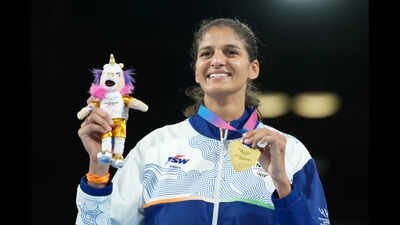







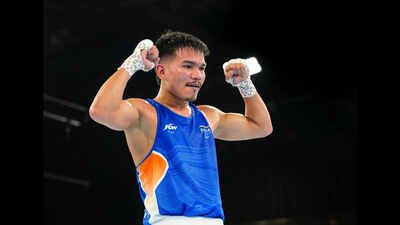
NEW DELHI: When Indian pugilist Jadumani Singh Mandengbam stepped onto the podium to receive the men’s 55kg silver medal at the 2026 Commonwealth Games in Glasgow, it marked the culmination of a journey that had almost ended before it had even begun.The 22-year-old Manipuri boxer was one of India’s standout performers, winning four consecutive unanimous 5-0 verdicts to storm into the bantamweight final before settling for silver against Australia’s Jye Dixon. His medal also formed part of India’s historic boxing campaign, which yielded seven golds and three silvers, making the country the No. 1 boxing nation at the Games for the first time.Yet, behind that success lay months of uncertainty, selection hurdles and a weight-category gamble that nearly cost him a place on the flight to Scotland.Speaking exclusively to TimesofIndia.com, former world champion and Jadumani’s mentor, Laishram Sarita Devi, recounted how the young boxer refused to abandon his Olympic dream even when every obstacle seemed stacked against him.
A bold gamble after the 50kg category disappeared
Jadumani had built his reputation in the 50kg category, winning medals at World Boxing Cups before learning that the division would no longer feature in the Commonwealth Games, Asian Games or Olympic programme.Rather than remain in a non-Olympic category, he decided to move up to 55kg — a division already occupied by some of India’s biggest names.“He continued to consult with me. Whenever he had to make a big decision, he called up and consulted with me — like increasing his weight category,” Sarita told TimesofIndia.com.“After he won a World Cup medal in 50kg, he got to know that the weight category is no longer in the CWG, Asian Games and Olympics. He wanted to move to 55kg.”The decision immediately brought fresh challenges.“Army had their No. 1 boxer in the 55kg category in Pune, who is Services’ No. 1 boxer. And the weight category also has Amit Panghal — Olympian and Asian champion. He said he wanted to move up the weight to compete at CWG, Asian Games etc, but was discouraged by hearing questions like whether he would be able to compete at that level, which created a doubt in him,” she said.Sarita, however, wanted only one answer: “We sat down and I asked him, ‘Are you confident about the decision?’ He said he was, so I told him to move up the category.”
The selection maze before Glasgow
The decision created another problem.Without competing in the National Championships, Jadumani could not enter the national coaching camp. But because he belonged to the Army Sports Institute, Services already had its designated 55kg representative. Attempts to let him represent Manipur also failed.“We tried to make him compete for the state of Manipur, but we didn’t get an NOC because he is with the Army,” Sarita said.Relief finally arrived through a Boxing Federation of India (BFI) policy that granted direct entries to the National Championships for World Boxing Cup medallists. The move was aimed at rewarding elite international performers and ensuring they were not blocked by the usual domestic qualification pathways.The decision allowed Jadumani to compete directly in the 55kg draw despite the institutional overlap, resulting in multiple squad members — Pawan Bartwal, Jadumani Singh and Amit Panghal — finding themselves in the same weight-category draw.Sarita said her ward grabbed the opportunity with both hands.“He then got a chance to compete in 55kg in the Nationals. Due to his effort, he won against the Services No.1, Olympians etc to be named Best Boxer in the Nationals. After that he got the chance to be part of the India camp,” she said.He then cleared the final selection trials, which included physical assessments alongside ring performances.“He participated in the final trial for the CWG and Asian Games — which had many aspects like strength and endurance tests before fighting in the ring. He won all of it to get selected for the CWG and was really happy and started training hard,” she added.
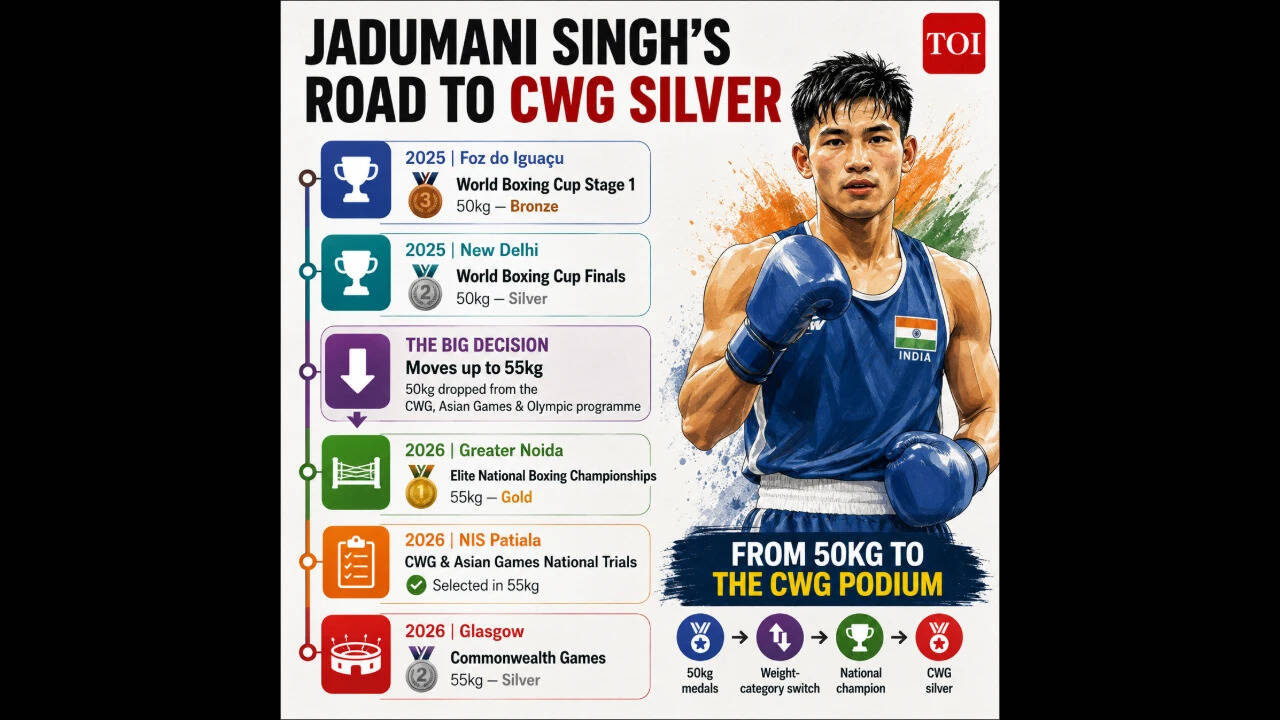
Jadumani Singh’s Road to CWG Silver (AI-generated Infographic)
The Sports Ministry hurdle
Just when Glasgow appeared certain, another setback emerged.Because Jadumani had only recently moved into 55kg, he did not possess the Asian ranking required under the Sports Ministry’s eligibility criteria for Commonwealth Games selection.“He got an explanation mail from the Sports Ministry, which put him in immense tension ahead of the Games,” Sarita recalled.Under the ministry’s guidelines, boxers were expected to be ranked among Asia’s top eight in their respective categories.“He was ranked No. 2 in 50kg, but he lacked a ranking in the new 55kg category. He had only competed in one Asian Championship in the new weight category before the trials for CWG and, being new to the category, lost in the quarterfinals,” she said.That led to fresh doubts over his selection.“He was disheartened when questions were raised whether he was a medal prospect because he was not in the rankings prescribed by the ministry. He called me and said the coaches were saying he may or may not be on the flight to the CWG because of this letter from the ministry,” she recalled.The uncertainty only ended after BFI submitted a detailed explanation to the ministry, outlining Jadumani’s circumstances following his weight-category switch.“BFI replied to the ministry properly, explaining everything and after a lot of effort his ticket to Glasgow was approved. What I like about him is that he is the kind of person who doesn’t give up and has a very strong will power,” she said.
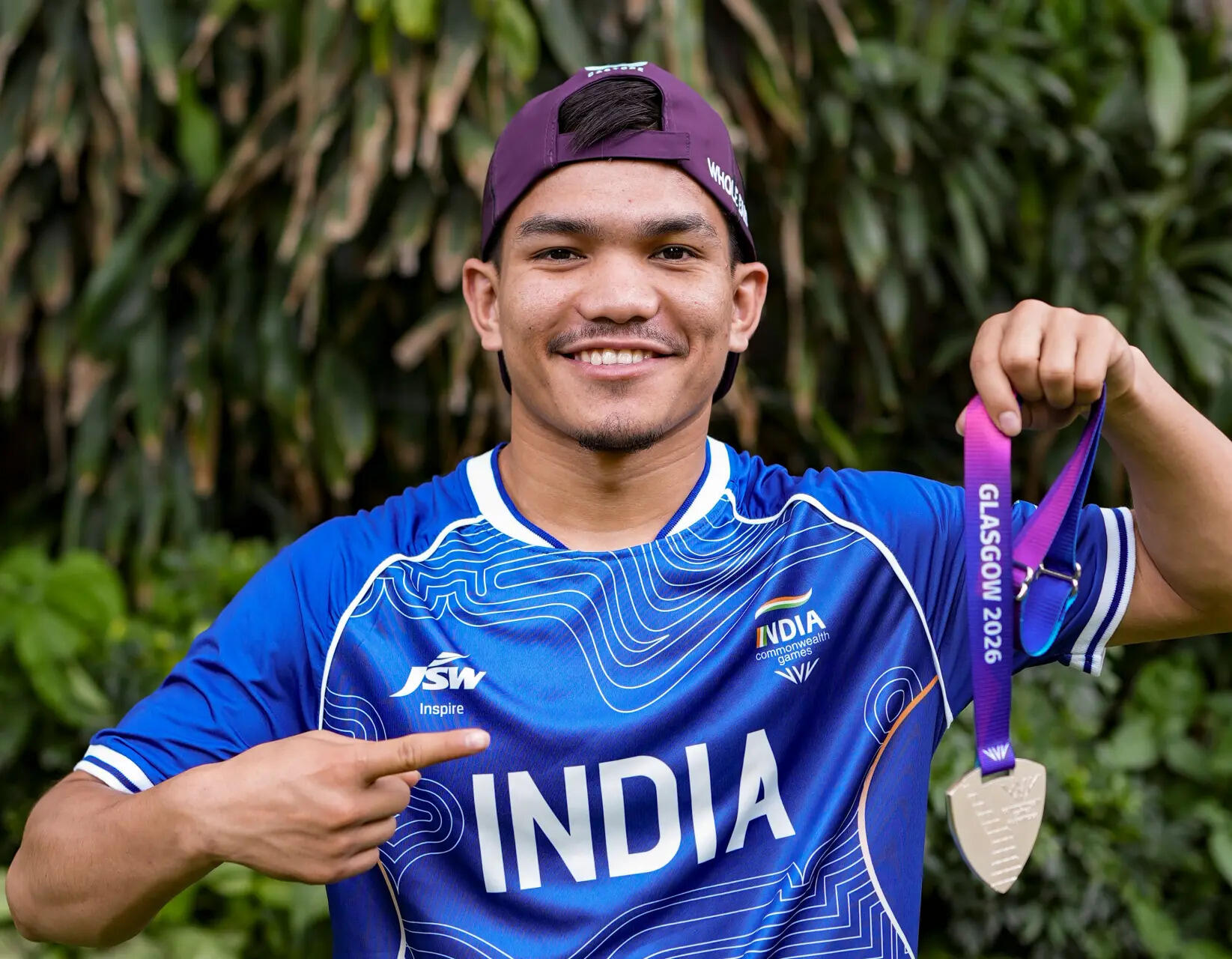
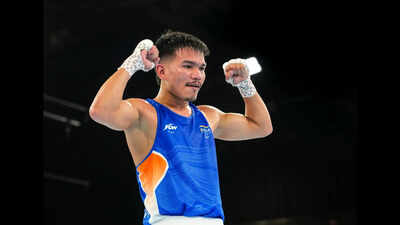
Jadumani Singh Mandengbam (PTI Photo)
Why the gold slipped away
Jadumani eventually reached the final after four demanding contests, each won by an identical 5-0 margin. But Sarita believes the scheduling ultimately worked against him.“Jadumani’s four bouts were very tough. He played all out in all the bouts till the semifinals as he got proper rest and recovery time. Since the gold medal opponent got a bye earlier, he had fewer bouts than Jadumani,” she explained.The semifinal-final turnaround, she felt, proved decisive. There was a one-day gap after every bout until the semifinals, but there was no gap between the semifinal and final in Glasgow.“Jadumani fought his semifinal in the evening and got the final bout the next morning only, so he did not get much time for recovery. If it was in the evening, he could have fought better. When he entered the ring for the final, I saw his face and body language sitting here and realised he had not had enough recovery,” she said.The experience, she believes, underlines the growing importance of sports science.“In such situations, we should look for how we can enhance or speed up the recovery process through sports science. We should discuss it to make sure our boxers can give 100 per cent every time they enter the ring,” she added.
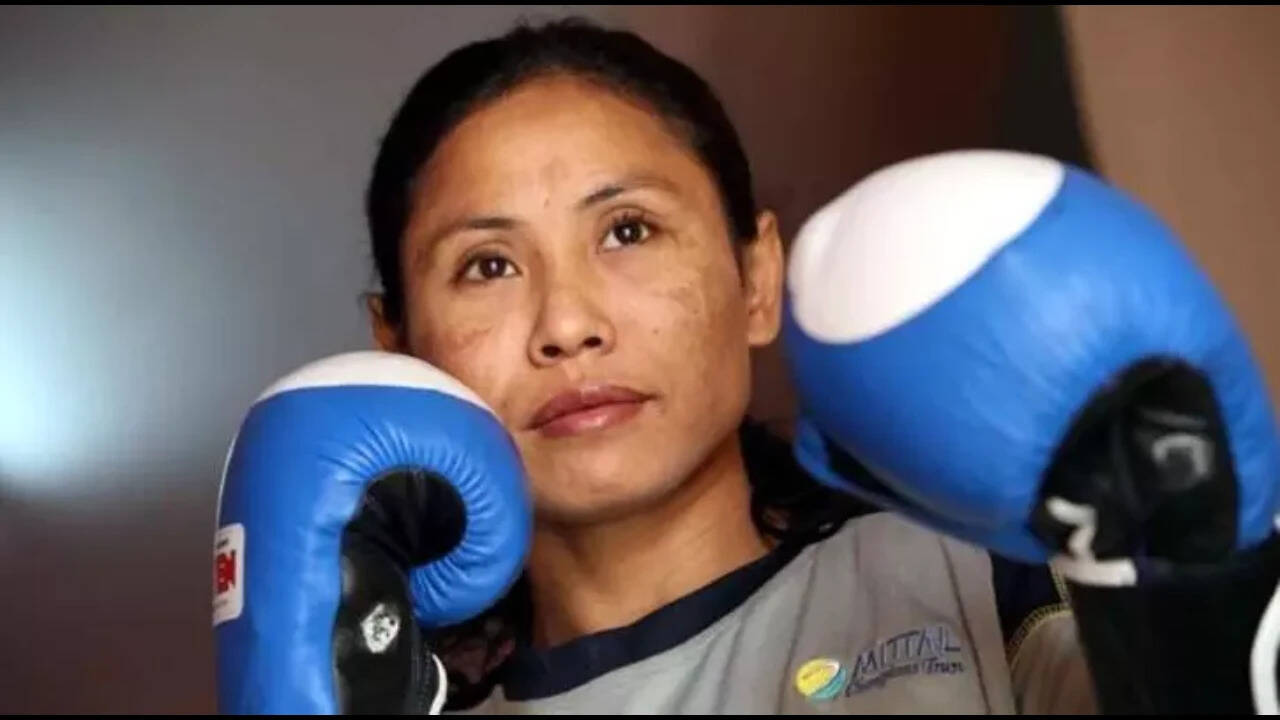
File Pic: L Sarita Devi (PTI Photo)
Olympic gold remains the ultimate dream
Sarita first noticed Jadumani as a youngster competing in a local tournament.“When I saw Jadumani for the first time, it was a tournament for young boys. His movement was really pleasing and I thought he could become a good boxer in the future. I identified him at that time only and gave him Rs 500 because I was very pleased with his performance,” she recalled.“Jadumani did not start with me from the grassroots. He learnt his basics from another academy. He came to my academy when he was preparing to enrol in the Army Sports Institute in Pune. At that time, I did not have any infrastructure and was coaching from a makeshift setup. And then Covid happened, we had to train in a very isolated small makeshift place,” she added.Years later, after training together through difficult Covid-19 conditions and watching him overcome one hurdle after another, Sarita believes Glasgow is only the beginning.“We missed gold at the CWG, but we will work hard to get gold at the Asian Games for sure,” she said.The bigger ambition, however, stretches far beyond continental success.“His first and primary target remains Olympic gold. Commonwealth Games and Asian Games are the stepping stones in that journey. He will try to win India’s first Olympic gold medal in boxing,” Sarita concluded.